Thousands of pest photos submitted for identification.

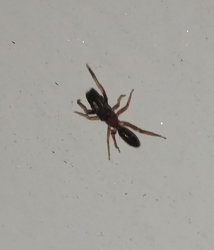
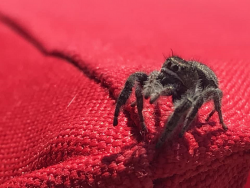
Jumping spider

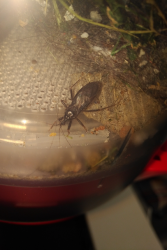
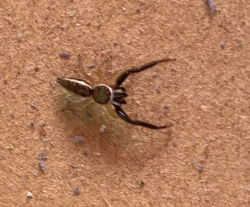
6902.       Saw this on opening our umbrella. No idea what it might be. Cornwall, Ontario. Canada

Number 6902. This is a jumping spider in the family Salticidae, another friendly pest controller. They do not spin a capture web, but track and hunt down their prey. Click here for images and much more detailed information.
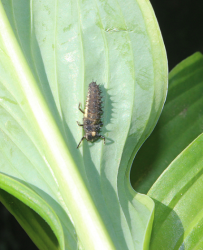
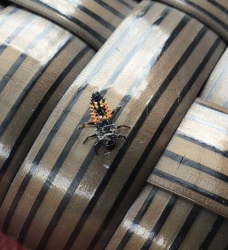
Larva of a lady beetle

6901.      I have seen these “bugs” before but they are especially numerous on our hostas this year. Can you help me to identify them and possibly control them? Highland Cres, Ont. Canada

Number 6901. You don’t want to control these, as they are providing free pest control for you. This is a larva of a lady beetle (Coleoptera: Coccinellidae), they are voracious predators on small soft-bodied insects such as aphids.  Click here for more detailed information

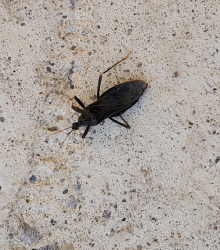
Assassin bug

6900.       My son accidentally put his hand on this insect while opening the garage door. It bit/stung him and it was very painful. Should I be concerned? Whitby, ON. Canada

Number 6900. This is an assassin bug known as a masked hunter (Reduvius personatus; Hemiptera/Heteroptera: Reduviidae); they are reputed to have a very painful ‘bite’, but it is not dangerous.  Click here for more detailed information.

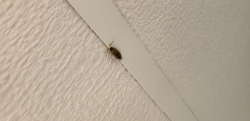
Sowbug

6899.      Found this bug in the ceiling. Sometimes it just fall out from the basement ceiling. Hope you can identify this. WINKLER, Manitoba. Canada

Number 6899. This is a sowbug, a terrestrial crustacean in the order Isopoda; the vast majority of these are harmless scavengers on decomposing organic matter. They breathe through gills that must be kept moist, so keeping your environs as dry as possible will discourage them from staying. Click here for more information.

Assassin bug

6898.       I think it’s a masked hunter…? Oshawa, Ontario. Canada

Number 6898. Indeed it is a masked hunter – assassin bug (Reduvius personatus; Hemiptera/Heteroptera: Reduviidae);  a cosmopolitan species often found indoors and reputed to have a very painful ‘bite’  Click here for more detailed information.

Assassin bug

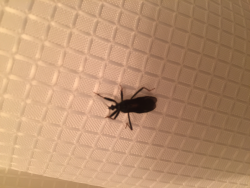
6897.     Montreal Quebec. Canada

Number 6897. This is an assassin bug known as a masked hunter (Reduvius personatus; Hemiptera/Heteroptera: Reduviidae), a cosmopolitan species often found indoors and reputed to have a very painful ‘bite’-  Click here for more detailed information.

Nymph of a seed bug

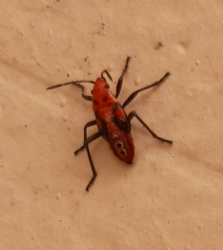
6896.    Outdoor insect, summer season ( June ). Jeddah. Saudi Arabia

Number 6896. This is a nymph of a seed bug (Hemiptera/Heteroptera: Lygaeidae), possibly in the genus Lygaeus.

Elm sawfly

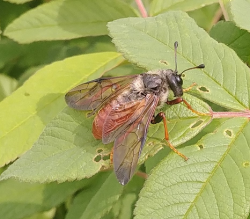
6895.      Hello, I found this bug on a rose bush in southern Quebec, Canada (it almost looks a little like a hornet). First time that we’ve seen them around here and we’ve seen about 3 of them this summer (2020). Mansonville, Quebec. Canada

Number 6895. This is an elm sawfly, Cimbex americana (Hymenoptera: Cimbicidae). They are harmless to humans, and their larvae often are mistaken for caterpillars. Click here for more detailed information.

Carpet beetle

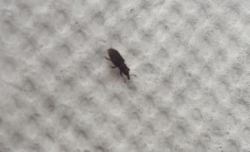
6894.       Very small. Under 5mm in length. Only show up during summer. We find them mostly in the living room but this year we have started finding them on out second floor in our bedrooms. Kitchener, Ontario. Canada

Number 6894. This looks like a carpet beetle (Coleoptera: Dermestidae) in the genus Attagenus (black carpet beetles and allies). Click here for some control recommendations.

Sphinx moth

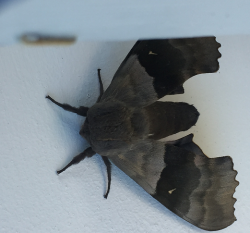
6893.      Nash Creek, NB. Canada

Number 6893. This is a sphinx moth (Lepidoptera; Sphingidae); it appears to be Pachysphinx modesta, known as the modest sphinx moth – Click here for an image.

Lacewing

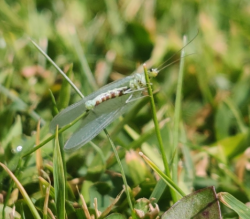
6892.        Kindly provide me the identity of the insect in the image attached. Thank you! Maligaon, Guwahati, India.

Number 6892. This appears to be a lacewing (Neuroptera; Chrysopidae). These and their larvae are general predators on other small, soft-bodied insects such as aphids and caterpillars. Click here for more detailed information.

Ichneumon wasp

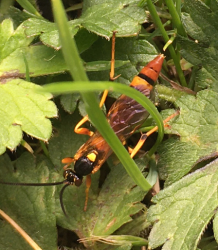
6891.     Do you know what this is? Is it a stinging insect? We have many on our front lawn. Victoria, BC. Canada

Number 6891. This is an ichneumon wasp (Hymenoptera: Ichneumonidae). These all are parasitic on other insects and spiders and are harmless to humans. Their ‘stinger’ lacks venom and is used as an egg-laying tool. Click here for an image

Jumping spider

6890.    Found in vehicle, rainy weather in late spring. Kelowna, Bc. Canada

Number 6890. This is a jumping spider (family Salticidae) in the genus Phidippus. These are harmless to humans. Click here for images and much more detailed information.
Scarab beetle

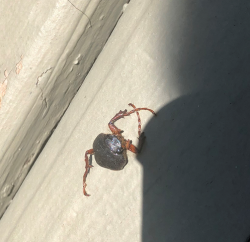
6889.      I found this bug on the deck of my backyard. It was dead already and is missing legs, so it was hard for me to identify. It’s about 7mm-1cm wide. I found it on June 12. The weather is spring transitioning to summer weather. It looks like a cross between a beetle and a spider. I haven’t come across an insect like this my whole life, so if you can identify it, what is it and should I be worried? Toronto, Ontario. Canada

Number 6889. This is the head, prothorax, and a few of the legs of a scarab beetle (Coleoptera: Scarabaeidae). Commonly encountered examples include the so-called May beetles and June bugs. Click here for an example.

Springtails

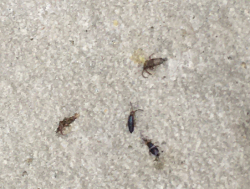
6888.    I have these bugs all over my concrete. The first photo is zoomed in and the other photo shows how tiny they really are. Calgary, AB. Canada

Number 6888. These are springtails, primitive arthropods in the order Collembola, closely related to true insects. These basically are harmless scavengers on bits of decomposing organic matter, but they can become nuisance pests when they occur indoors in large numbers. They are quite susceptible to desiccation, so keeping indoor humidity levels as low as practical is the best control. Click here for an example

Asian multi-coloured lady beetle

6887.     Toronto, ON. Canada

Number 6887. This is a larva of an Asian multi-coloured lady beetle, Harmonia axyridis (Coleoptera: Coccinellidae). This is an introduced species that has become widespread in North America, sometimes accused of displacing native species. In the process.  Click here for more detailed information.
Cockroach

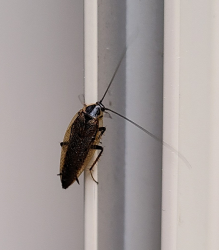
6886.    These bugs appear every year and get their way into my house only in summer. Which makes me think that’s they aren’t cockroach. They get i some my house starting May-June and dissappear in September or so. If they are cockrouches…why do they appeR only fir 3 months and then dissappear? They also fly sometimes, but rarely. They are on my countertop, my shower etc… My house has a ravine backyard. Toronto, Vaughan Ontario.
Canada

Number 6886. This is a cockroach, but it is not one of the commonly encountered peridomestic pest species. I suspect that it is one of the so-called wood cockroaches in the family Ectobiidae, see example number 2 in this image: Click here

Comb-footed/cobweb spider

6885.      Victoria, BC. Canada

Number 6885. This is Steatoda triangulosa, a comb-footed/cobweb spider in the family Theridiidae. Known as the triangulate cobweb spider, it is harmless to humans.

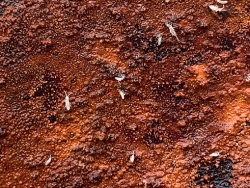
Springtails

6884.       Found in a water valve, at the dead end of a chlorinated water system, so likely stagnant water (which has depleted chlorine residual). Several white insects on rusted water valve chamber. Pemberton, British Columbia. Canada.

Number 6884. These are springtails, primitive arthropods in the order Collembola, closely related to true insects. These basically are harmless scavengers on bits of decomposing organic matter, but they can become nuisance pests when they occur indoors in large numbers. They are quite susceptible to desiccation, so keeping indoor humidity levels as low as practical is the best control. Click here for an example

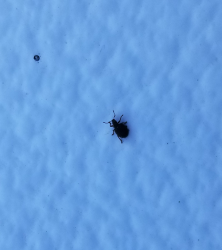
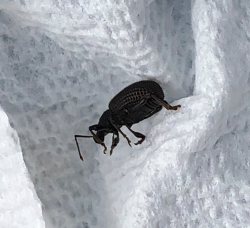
Broad-nosed/short-snouted weevil

6883.      There are thousands of theses around my house and pool. They seem to come out of the cement crack up against the house. They are around for 2 months it seems. Minnedosa, Manitoba. Canada

Number 6883. This is a broad-nosed/short-snouted weevil (Coleoptera: Curculionidae; subfamily Entiminae). These weevils often enter buildings in search of shelter, but do no harm there. Click here for an example.

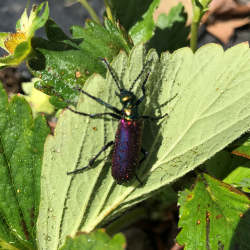
Blister beetle

6882.        I have found a few of these around our orchard, but have seen 3 in our strawberries. Bankend, Saskatchewan. Canada

Number 6882. This is a blister beetle (Coleoptera: Meloidae) in the genus Lytta likely Lytta nuttalli; Click here for more detailed information.
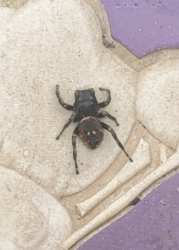
Jumping spider

6881.         Close to 1 cm in length, crawling on the wall, was by itself. Found on June 8,2020 during the day. Markham, ON – Ontario. Canada

Number 6881. This is a jumping spider (family Salticidae). It looks like one of the ant-mimics in the genus Synemosyna; Click here for an example.

Larva of an Asian multi-coloured lady beetle

6880.       Lived here for 33 years, never seen one of these and can’t find anything close online. Kingston, Ontario. Canada

Number 6880. This is a larva of an Asian multi-coloured lady beetle, Harmonia axyridis (Coleoptera: Coccinellidae). This is an introduced species that has become widespread in North America, sometimes accused of displacing native species. In the process. Click here for more detailed information.
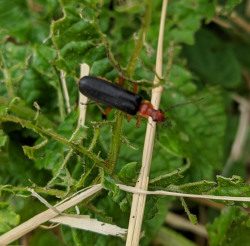
Soldier beetle

6879.      There is something eating the leaves of our potato plants, which are mulched with old dry straw. I put sticky traps and didn’t find anything. Then I saw this colourful beetle on a leaf. Could this be the culprit? Duncan, BC. Canada

Number 6879. This is a soldier beetle (Coleoptera: Cantharidae); they are predators on other insects and would not hurt your potatoes. Click here for an example.

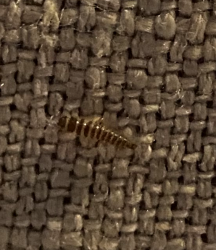
Larva of a carpet beetle

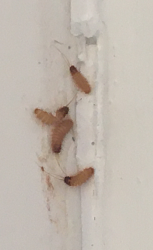
6878.    Found in the bedroom and dresser drawers – found about 12 Alive and dead. Edmonton, Alberta. Canada

Number 6878. This appears to be a larva of a carpet beetle (Coleoptera: Dermestidae) in the genus Attagenus (black carpet beetles and allies). Click here elsewhere on this site for some control recommendations.

Jumping spider

6877.      Is this a trite? I read they are found in New Zealand? St. Catharines, On. Canada

Number 6877. This is Hentzia palmarum, a jumping spider (family Salticidae), a species widespread in North America;  Click here and Click here for more detailed information.
Young larvae of a beetle

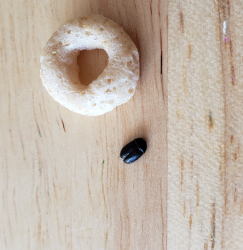
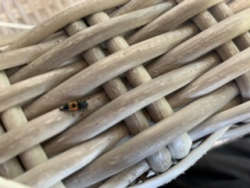
6876.        We are finding these very tiny 1mm bugs around our powder room window and on the floor under the window. They move very slow and we can’t see where they are getting in. We caulked every hole we could find it every morning we find about 5 and then. Few more there through the day. If you could identify them and advise on how to eliminate them that would be. Very helpful. Thank you. Richmond hill.

Number 6876. These look like very young larvae of a beetle in the family Dermestidae (hide/skin/carpet beetles and allies);  Click here for an example. They would be coming from eggs that the adult beetle(s) laid somewhere in or near that room. Check any fabrics (including carpeting and curtains) and clothing items you have that are made of or contain wool or silk for signs of chewing damage.

March fly

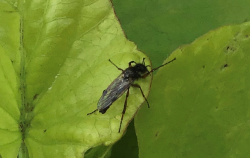
6875.      Thousands of them everywhere! Bathurst, NB. Canada

Number 6875. This is a March fly (Diptera: Bibionidae); harmless nuisance pests. Click here for more detailed information

Weevil

6874.        These little critters suddenly started landing on us on the back deck around dusk last night. Approx 3 mm in length, and it felt like they were trying to bite before we squished them. We saw about a dozen of them before going back into the house. I’ve never seen this insect in the 17 years we’ve lived here……..what is it, and is it dangerous???? Lynden, Ontario. Canada

Number 6874. This is a weevil (Coleoptera: Curculionidae); its size and shape are suggestive of one of the grain/granary weevils in the genus Sitophilus,  Click here for an example. These would not in the least bit interesting in biting humans, but you might want to check any grain products you have in storage for signs of insect presence.

Broad-nosed/short-snouted weevil

6873.      Found in washing machine. Garibaldi Highlands, BC. Canada

Number 6873. This appears to be is a broad-nosed/short-snouted weevil (Coleoptera: Curculionidae; subfamily Entiminae). These weevils often enter buildings in search of shelter, but do no harm there. Click here for an example.

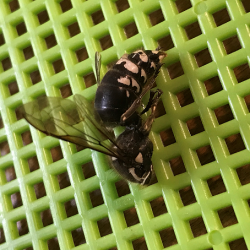
Bald-faced hornets

6872.       I saw this Bald faced Wasp at 7pm in my backyard on June 2, 2020. I have never seen on before in my life. My husband Googled it. I am wondering if I should submit this to you. Midland, Ontario. Canada

Number 6872. Bald-faced hornets, Dolichovespula maculata (Hymenoptera: Vespidae) actually are beneficial in that they prey upon insects such as deer flies, horse flies, and caterpillars. As long as you do not disturb their nest, they most likely will leave you alone. They are quite common on our property, and in 20 years of living here, we never have been stung by one. Click here for more detailed information.
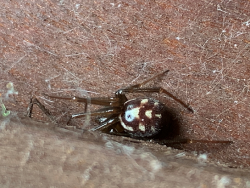
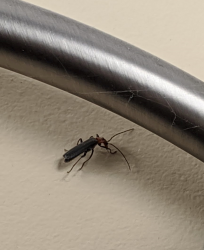
Soldier beetle

6871.      First time seeing this inside my home. I’m concerned it could be destructive. Any help is appreciated. Prince Rupert, BC. Canada

Number 6871. This is a soldier beetle (Coleoptera: Cantharidae). They are general predators on other small arthropods and also serve as pollinators. Not at all destructive. Click here for an example.

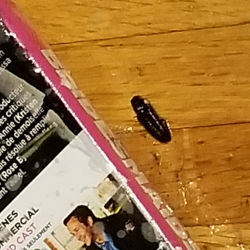
Click beetle

6870.       About 2cm long. Hid in the dark, moved slow. Tried matching it to different types of insects, but no luck. I’ve never seen one before. Live in a high-up lakefront apartment. Oakville, Ontario. Canada

Number 6870. This appears to be a click beetle (Coleoptera: Elateridae), a harmless accidental ‘visitor.’ They are quite capable of flying, which is how it most likely entered your apartment. Click here for details.